

Training for Precision: Equipping Our People to Deliver Excellence
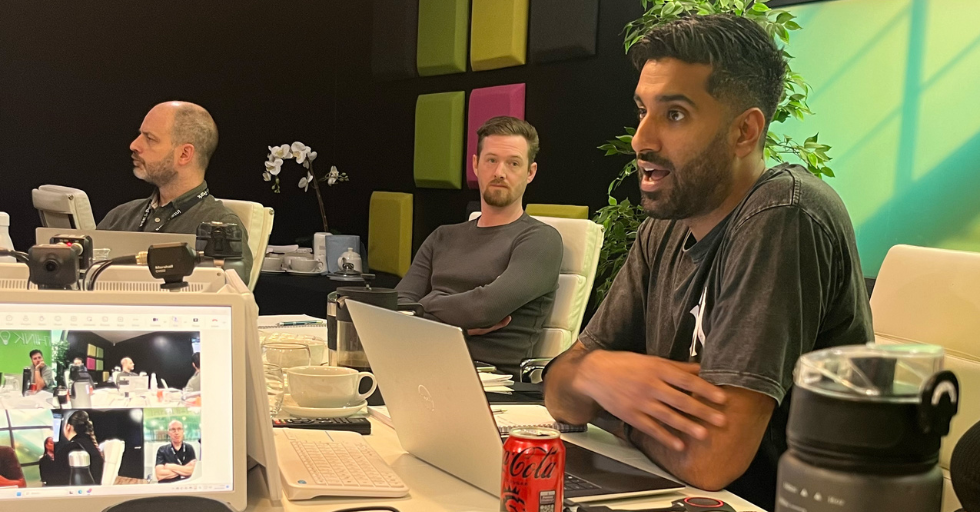
By Kulvir Kang, Director of Product
Tech alone doesn’t deliver results. People do.
That idea shapes how we design our systems and how we think about the people using them. Our systems are only as effective as the people using them, and our people are only as effective as the training they receive. That’s why our approach is grounded in how our sites actually operate day-to-day.
Over time, it became clear that building intelligent systems and building confident teams are inseparable.
As our business evolved from UK Parking Control into Intelli-Park, our training evolved too. Enforcement was once our foundation, but intelligence is now our focus. The same discipline that once ensured compliance on site now drives understanding, consistency and care in every client interaction.
We’ve built our training model around a simple principle: context matters. Whether someone is managing data in iHub, validating permits o, patrolling a site or supporting a client portfolio, they need to know not only how a system works, but why it works that way. The best results come when people see the bigger picture.
Training with Purpose
All our learning programmes are built on the POPIT framework: People, Organisation, Processes, Information and Technology. It gives us a practical way to think about training as a whole. It helps us focus on how work really happens, add structure where it’s needed, use data to guide decisions, and make sure the technology supports people rather than dictating how they work.
Within that framework, we focus on four key principles:
- Understand the user case. A university estate manager, a hospital facilities lead and a retail managing agent share some needs but differ in many. We map their priorities and constraints, then design workflows around how they actually operate.
- Make it simple. Whether it’s an operative issuing a PCN on mobile or a receptionist validating a guest, everything is set up to reduce admin time. The steps are clear, permissions pre-configured and feedback immediate.
- Coach with context. New starters shadow experienced operatives and account managers, learning on live sites through structured scenarios: peak-time usage, overnight misuse in residential bays, EV etiquette, blue badge checks and more. We use data from our platforms to review performance and tailor coaching to each person.
- Close the loop. Every product release is informed by what the team sees out there. Heat maps from data mining show abuse hotspots, operative feedback highlights signage gaps, and account managers flag edge cases. We prioritise fixes and improvements by the size of the client problem each change will solve.
The result is training that people can apply in real situations, review through data, and improve over time. It shows what good looks like, then equips people to repeat it with confidence.
Values in Action
When we invest in people, we focus on how they think and act, not just what they’re trained to do. It’s visible in the small moments: noticing something isn’t working, taking responsibility for it, and staying involved until it’s sorted. Accountability shows up when someone takes responsibility for an issue end to end, even when it crosses roles or teams. Tenacity means noticing when something could be done better and following it through. And synergy shows up when working together gets better results than trying to solve something alone.
The result is a workforce that’s confident, informed and adaptable. That matters because our clients operate in environments that change quickly: retail peaks, hospital demand, residential disputes, surges in EV use. A single rulebook can’t prepare people for that variety. What prepares them is training that builds judgment and confidence in real situations.
As the technology has become more connected, we’ve learned that training has to evolve with it, not lag behind. The next phase will focus on giving our people the same clarity our systems provide: live performance insight, scenario-based learning and adaptive modules that evolve with our products. Training should move as fast as the technology it supports.
For me, success isn’t about how much our people can recite, but how confidently they apply what they know. The most advanced system achieves nothing without a team that understands its purpose and trusts its design.
That’s why I see intelligence as something that shows up in how our people work, not just in the technology we build.
Posted on 16 January 2026
Subscribe on LinkedInRead More

What Happens When You Install an ANPR System...
Our Blog
What Happens When You Install an ANPR System...
Deciding to install ANPR is usually the easy ...

Everything You Need to Know About the Best P...
Our Blog
Everything You Need to Know About the Best P...
The best parking systems no longer rely on ba...

What is a Parking System? Everything You Nee...
Our Blog
What is a Parking System? Everything You Nee...
What is a Parking System? Everything You Need...
AI ANPR and Parking Solutions: Enhancing Acc...
Our Blog
AI ANPR and Parking Solutions: Enhancing Acc...
How AI ANPR is Revolutionising Modern Parking...

How Much Does ANPR Cost? A Full Breakdown of...
Our Blog
How Much Does ANPR Cost? A Full Breakdown of...
Published: 23/04/2026
Last Updated:23/04/202...

EV Charging Explained: How Do EV Charging St...
Our Blog
EV Charging Explained: How Do EV Charging St...
EV Charging Explained: How Do EV Charging Sta...

