What Happens When You Install an ANPR System? A Step-by-Step Guide

Deciding to install ANPR is usually the easy part. The harder question is what actually happens between that decision and getting a working system on site. If you already understand how ANPR works, this guide covers the next stage, which is the practical process of getting a system surveyed, installed, and running on your car park.
Installation is not a single event. It runs through several distinct stages, and the detail of each one depends on your site rather than a generic template. This guide walks through what to expect at each stage, where sites commonly run into complications, and how long the process typically takes.
Table of Contents
- Key Takeaways
- Site Survey and Suitability Assessment
- Hardware Selection and Installation
- Signage and Compliance Requirements
- Integration and System Configuration
- Testing, Commissioning, and Going Live
- How Long Does ANPR Installation Take?
- Minimising Disruption to a Live Car Park
ANPR Installation: Key Takeaways
ANPR installation starts with a site survey and covers entry points, sightlines, power, and existing infrastructure before any hardware is set up. Sites with multiple access points, private roads, or limited power are accommodated through additional cameras or solar-powered units rather than overlooked or ruled out. Signage and UK GDPR-compliant data handling are legal requirements that affect whether enforcement holds up, and system configuration is what turns generic hardware into a setup matched to your site's permit and payment rules. A straightforward single-lane site typically goes live within a few weeks, with more complex sites taking longer, and installation is generally scheduled to keep the car park operational throughout.
Site Survey and Suitability Assessment
Every installation starts with a site survey, not an order form. A surveyor assesses the physical layout of your car park, looking at the number and position of entry and exit points, sightlines for camera placement, existing power supply and network connectivity, and any current CCTV or barrier infrastructure that a new system needs to work around.
This stage exists because not every car park suits the same configuration, for example, a single-lane site with one entrance and clear sightlines is straightforward, but a site with multiple access points, restricted power access, or an unconventional layout needs a tailored approach before any hardware is ordered.
A typical survey covers:
- Entry and exit points, including how many there are and how vehicles move through them
- Camera sightlines, to confirm plates can be captured reliably in both directions
- Power and network access, including whether mains power reaches proposed camera positions
- Existing infrastructure, such as current CCTV, barriers, or signage that the new system needs to integrate with or replace.
When a Site Doesn't Fit a Standard ANPR Installation Setup
Some sites need more than a standard single-lane configuration. Car parks with multiple entrances or exits typically need additional cameras to maintain accurate coverage across every access point. Sites on private roads, where a public highway runs directly alongside the car park, can complicate camera positioning and require closer attention to what the system actually captures.
Limited power access is another common issue, particularly on older sites or temporary car parks. This is usually solved with solar-powered camera units rather than running new mains cabling, but this depends on the site's exposure and camera placement. None of these situations rule out ANPR, they just mean the configuration is worked out during the survey rather than assumed in advance.
Hardware Selection and Installation
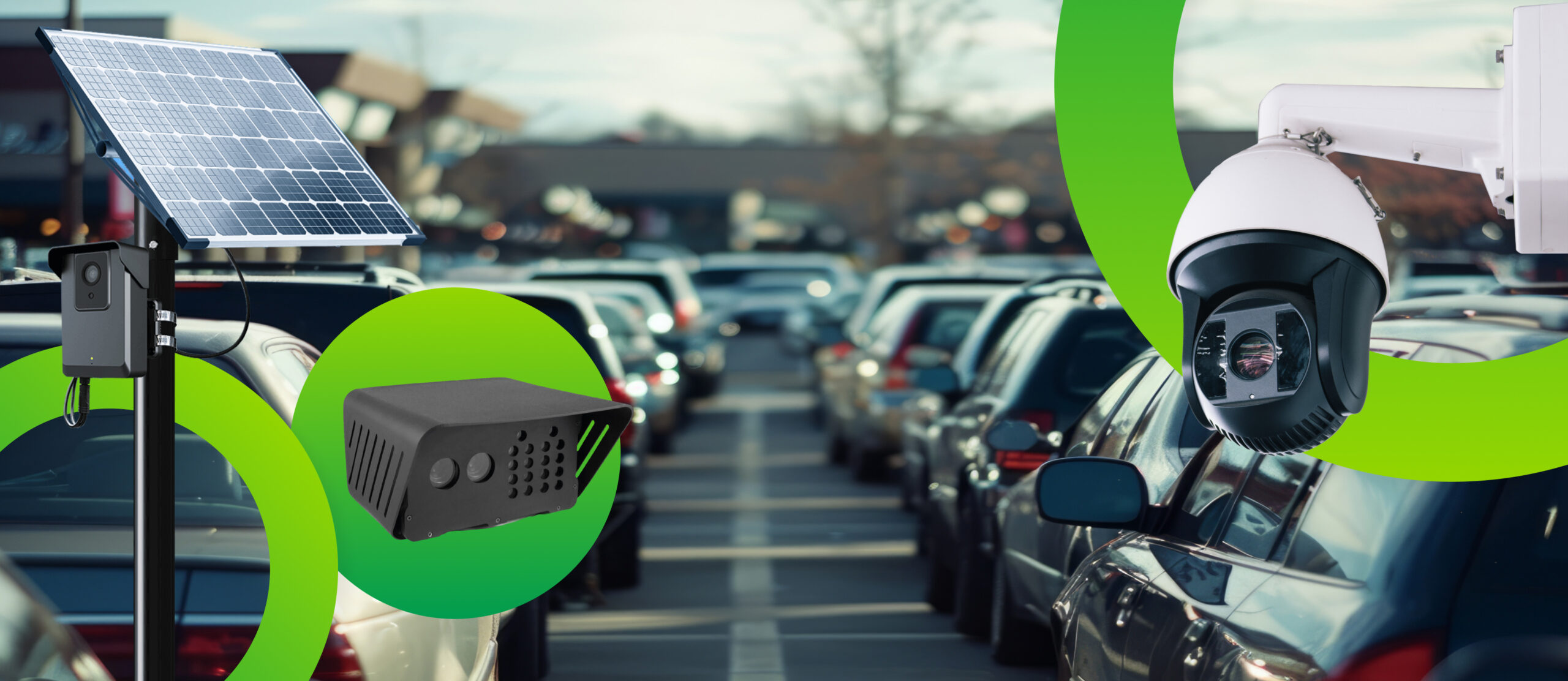
Once the survey confirms what the site needs, physical installation begins. This typically involves cameras mounted at entry and exit points, a controller that processes the captured plate data, and, where relevant, integration with barriers or payment terminals.
Camera positioning is more precise than it might appear. Cameras need to be angled and mounted to capture plates accurately in varying light, including low light and direct glare, since accuracy at night is one of the more common points of failure in poorly specified systems. Where mains power isn't practical, solar-powered units are a common alternative, removing the need for new cabling runs.
The controller is the component that converts captured images into usable plate data and passes it to the wider system, whether that's a permit list, a payment terminal, or a management dashboard. Getting camera position and controller configuration right at this stage is what determines how reliable the system is once it's live, not just how sophisticated the hardware is.
Signage and Compliance Requirements
ANPR installation carries legal obligations that go beyond the hardware itself. Clear, compliant signage is required at every entry point and at intervals around the site, setting out the terms of parking and confirming that the site is monitored by ANPR. This is not just a formality. Signage that is unclear, poorly placed, or missing can undermine enforcement and create disputes later.
Data handling is the other compliance layer. Vehicle registration data is personal data, and its collection, storage, and use must follow UK GDPR requirements as set out by the Information Commissioner's Office. If your site operates under a scheme accredited by the British Parking Association or the International Parking Community, installation should also align with the relevant code of practice for that accreditation.
Getting this right at installation avoids two problems: a system that can't be enforced because signage doesn't meet requirements, and a data handling process that creates risk rather than reducing it.
Integration and System Configuration
With hardware in place and signage confirmed, the system is configured to actually apply your site's rules. This includes setting up permitted vehicle lists for staff, residents, or other authorised users, integrating with any permit or payment platform, and defining maximum stay periods or other conditions specific to your site.
For sites that want ongoing visibility into how the car park is being used, this is also where the system connects to a reporting layer such as our iHub Insights dashboard, giving you entry and exit data, dwell times, and usage patterns rather than a system that simply runs in the background.
Configuration is where a generic install becomes a system tailored to your site's actual rules. A retail car park managing customer-only parking has different requirements from a residential development managing resident and visitor permits, even though the underlying hardware may be the same.
Testing, Commissioning, and Going Live
Before a system goes live, it needs to be tested against real conditions, not just checked on paper. This means confirming plate capture accuracy across different times of day and lighting conditions, verifying that any barrier or payment integration responds correctly, and checking that permitted vehicle lists are working as configured.
Where the system is managed on your behalf, this stage also includes handover to your team and confirming who has access to reporting dashboards, how permit lists are updated, and what the process is if something needs adjusting after it goes live. A system that passes commissioning checks but leaves your team unclear on how to use it is only half finished.
How Long Does ANPR Installation Take?
Installation timelines vary by site, but a straightforward single-lane car park typically moves from initial survey to a live system within a few weeks. Sites with more complex requirements, such as multiple entry points, limited power access, or integration with existing barrier and payment systems, generally take longer, since more of the configuration work happens before hardware goes in.
The main factors that prolong the timeline are the number of access points requiring coverage, the extent of any existing infrastructure that needs to be worked around, and how much custom configuration the site's permit or payment rules require.
Speak to us for a realistic timeline once your site survey is complete, since this is the point at which an accurate estimate can be given rather than a general range.
Minimising Disruption to a Live Car Park
Most ANPR installations happen on car parks that stay operational throughout the process. Installation work is typically scheduled around site usage patterns, with camera and signage work carried out during lower-traffic periods where possible.
For larger or multi-entrance sites, installation can be phased, bringing entry points online one at a time rather than closing the whole car park during the changeover. Clear communication with site users, particularly around new signage and any temporary access changes, reduces confusion during the transition and helps the system bed in without generating unnecessary queries or disputes once it's live.
Get in touch to arrange a site survey and find out what installation would look like for your car park.
Posted on 10 September 2026
Subscribe on LinkedInRead More

Are FM teams leaving value in their car park...
Our Blog
Are FM teams leaving value in their car park...
Parking is often judged by whether it runs wi...
What Happens When You Install an ANPR System...
Our Blog
What Happens When You Install an ANPR System...
Deciding to install ANPR is usually the easy ...

Everything You Need to Know About the Best P...
Our Blog
Everything You Need to Know About the Best P...
The best parking systems no longer rely on ba...

What is a Parking System? Everything You Nee...
Our Blog
What is a Parking System? Everything You Nee...
What is a Parking System? Everything You Need...
AI ANPR and Parking Solutions: Enhancing Acc...
Our Blog
AI ANPR and Parking Solutions: Enhancing Acc...
How AI ANPR is Revolutionising Modern Parking...

How Much Does ANPR Cost? A Full Breakdown of...
Our Blog
How Much Does ANPR Cost? A Full Breakdown of...
Published: 23/04/2026
Last Updated:23/04/202...